
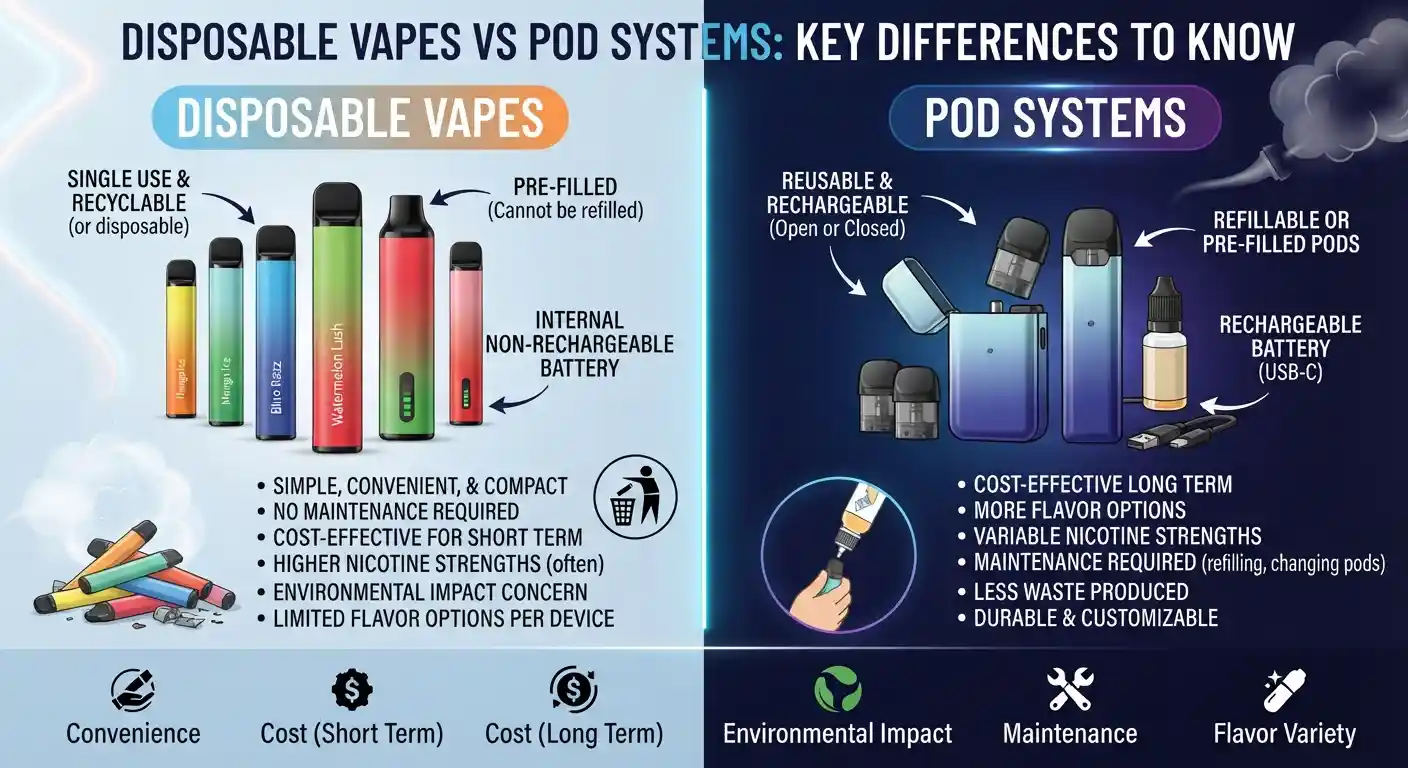
Vaping devices come in several formats, and two of the most commonly discussed options are disposable vapes and pod systems. Although both are designed around similar basic principles, their construction, maintenance, battery systems, and consumable formats can be quite different.
For adults researching modern vaping technology in Dubai and across the UAE, understanding these differences can make it easier to distinguish between device categories. The right comparison is not simply about size or appearance. Factors such as charging, maintenance, waste, e-liquid delivery, and local regulations can all affect how these products are viewed and used.
What Are Disposable Vapes?
Disposable vapes are compact electronic devices designed around a relatively simple format. The device normally contains a battery, heating element, and pre-filled liquid reservoir in a single unit.
Unlike reusable devices, disposable models are generally not designed around long-term maintenance. Once the internal supply has been depleted or the battery can no longer operate the device, the entire unit reaches the end of its intended service life.
This simple construction is one reason disposable devices have become an important category within the broader vaping market. They eliminate several components associated with traditional reusable systems, although they also create additional electronic waste when individual devices are discarded.
How Do Pod Systems Work?
Pod systems take a different approach. Instead of combining everything into one disposable unit, they generally use a reusable battery device together with a replaceable or refillable pod.

The pod contains the liquid and interacts with the device’s heating system. Depending on the design, users may replace the entire pod or refill a compatible pod with e-liquid.
Pod systems therefore separate the main device from the consumable component. This allows the battery section to remain in use for a longer period while only the pod needs to be replaced periodically.
This distinction is particularly useful when comparing different product categories rather than focusing only on individual brands.
Device Size and Portability
Both disposable vapes and pod systems are generally designed to be compact. Their smaller dimensions make them different from larger vaping devices that may have adjustable settings, larger batteries, or more complex controls.
Disposable models often have a straightforward design because fewer user-serviceable components are involved. Pod systems can also be very compact, but their construction may include charging ports, buttons, screens, or other features depending on the model.
Searches for Relx Dubai, for example, often relate to compact pod-style vaping products and the wider category of small electronic devices. From a technical perspective, the important distinction is the pod-based architecture rather than simply the brand name.
Battery and Charging Differences
Battery design is another major difference between the two categories.
Many disposable devices are built around batteries intended to last for the expected life of the product. Some modern disposable formats may include rechargeable batteries, but the device itself remains designed around a limited consumable lifespan.
Reusable pod systems, on the other hand, generally rely on rechargeable batteries. The battery can be charged repeatedly while pods are replaced or refilled as required.
This creates a different ownership model. With a reusable system, the same main device may remain functional over an extended period, whereas a disposable format eventually requires replacement of the complete unit.
E-Liquid and Pod Design
The liquid delivery system also differs between the two formats.
Disposable devices normally arrive with their liquid reservoir already integrated into the product. Users therefore do not need to handle a separate bottle or pod during the normal intended use of the device.
Pod systems may provide either refillable or pre-filled options. Refillable pods offer greater flexibility, while pre-filled pods maintain a simpler approach similar to disposable products.
The liquid itself may contain nicotine, and nicotine concentration can vary significantly between products. Because nicotine is addictive, adults should consider the health implications and applicable regulations before using any nicotine-containing product.
Maintenance Requirements
One of the clearest distinctions between the two categories is maintenance.
Disposable devices require little technical maintenance because the major components are integrated into the unit. Their simplicity can be convenient from an engineering perspective, but it also means that individual components generally cannot be repaired or replaced.
Pod systems require more attention. Users may need to charge the battery, replace pods, clean certain parts, or monitor the condition of the device.
The additional maintenance is not necessarily a disadvantage. It simply reflects a different design philosophy: disposables prioritize an integrated format, while reusable pod systems separate the long-term device from its consumable components.
Waste and Environmental Considerations
Electronic waste is an increasingly important part of the discussion surrounding vaping devices.
A disposable product contains several components, including a battery and electronic circuitry, that eventually become waste. When many individual devices are discarded, the overall volume can become significant.
Reusable pod systems may reduce the amount of hardware discarded because the primary battery unit can be retained. However, replacement pods and other consumable components still create waste.
Neither category should therefore be considered completely free from environmental concerns. Responsible disposal and compliance with local waste-management requirements are important considerations for electronic products.
Why Disposable Devices Have a Different Market Position
Disposable vapes are often associated with convenience and simplified construction. Their integrated design means fewer separate components need to be managed.
Interest in products described through searches such as ElfBar Dubai can be viewed within this broader disposable-device category. The important point for consumers is to understand the difference between a disposable format and a reusable pod system rather than focusing solely on individual product names.
Disposable products may also vary considerably in battery capacity, liquid capacity, physical design, and intended lifespan. These differences mean that two products belonging to the same broad category can still have substantially different specifications.
Health and Nicotine Considerations
The technological differences between vaping devices should not be confused with differences in health risk.
Both disposable and pod-based electronic cigarettes can deliver nicotine when nicotine-containing liquids or products are used. Nicotine is addictive, and vaping is not risk-free.
Adults who do not currently use nicotine products should not begin using them simply because a particular device is compact or technologically advanced. People who already use nicotine should also be aware of dependence and the potential health consequences.
The design of a device does not remove the risks associated with its contents.
UAE and Dubai Regulations
Anyone researching vaping products in Dubai should also consider the regulatory environment. Electronic cigarettes, vaping products, tobacco products, and nicotine-containing products can be subject to specific rules concerning sale, importation, advertising, age restrictions, and public use.
Rules can also change over time, so current official UAE requirements should always take priority over older online information.
Public locations may have their own restrictions as well. Users should avoid assuming that a device can be used anywhere simply because it is electronic rather than traditional tobacco.
Which System Is More Suitable?
There is no single answer that applies to every adult user because disposable vapes and pod systems are designed around different priorities.
A disposable format emphasizes an integrated design and minimal maintenance. A pod system focuses more on a reusable main device with replaceable or refillable consumables.
When comparing the two, useful factors include:
- Device construction
- Battery and charging requirements
- Pod or liquid format
- Maintenance needs
- Waste generation
- Nicotine content
- Local regulations
- Long-term device requirements
Looking at these factors provides a more useful comparison than judging a device simply by its appearance or popularity.
Final Thoughts
Disposable vapes and pod systems represent two distinct approaches to modern vaping technology. Disposable models combine the major components into a single unit, while pod systems generally separate the reusable battery device from the consumable pod.
Understanding this difference can help adults interpret product information more accurately and recognize why various vaping devices are designed differently. Terms associated with brands and products, including Relx Dubai and ElfBar Dubai, are often searched within these broader categories, but the underlying technology and regulatory considerations remain more important than branding alone.
For anyone researching vaping in Dubai, responsible decision-making should include awareness of nicotine dependence, health considerations, electronic waste, age requirements, and current UAE regulations.
Related Reading: https://setting.ae/disposable-vapes-vs-pod-systems-key-differences-to-know/

